
Views: 5
Vulturine Guineafowl: The Striking African Ground Bird
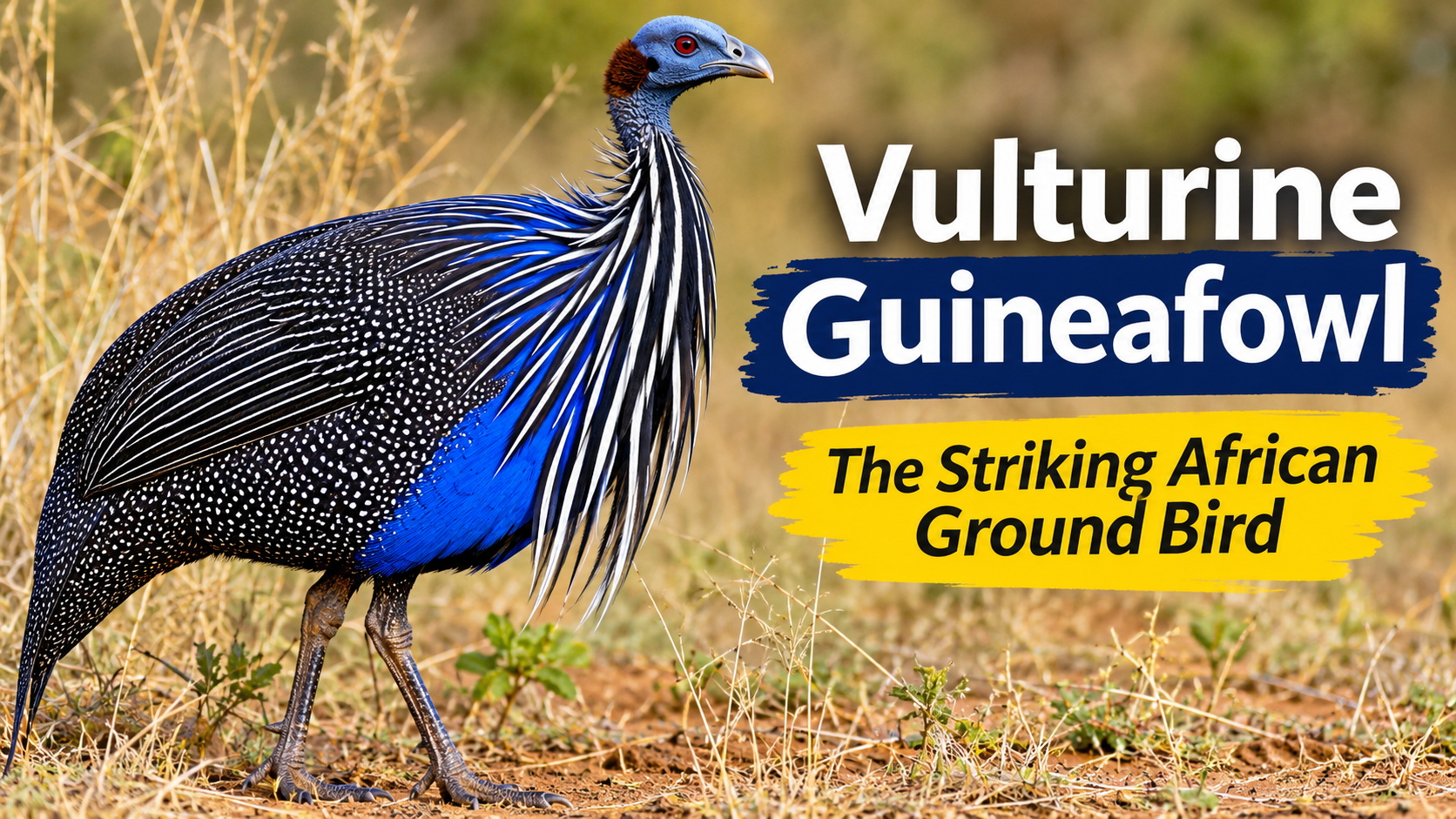
The Vulturine Guineafowl (Acryllium vulturinum) is one of Africa’s most spectacular ground-dwelling birds. Its brilliant cobalt-blue feathers, striking black-and-white plumage, bright red eyes, and unusual bare head make it instantly recognizable.
Native to the dry landscapes of northeastern Africa, this remarkable species is the largest living guineafowl. Although its head resembles that of a vulture, it belongs to the guineafowl family, Numididae.

Quick Facts About the Vulturine Guineafowl
- Scientific name: Acryllium vulturinum
- Family: Numididae
- Length: Approximately 61–71 cm
- Distribution: Ethiopia, Somalia, Kenya, and Tanzania
- Habitat: Dry savannas, open grasslands, and thorn scrub
- Diet: Seeds, fruits, insects, and other small invertebrates
- Behavior: Social and primarily ground-dwelling
- Conservation status: Least Concern
A Bird with Extraordinary Plumage
The Vulturine Guineafowl is particularly famous for its striking appearance. Its chest and lower body feature intensely colored blue feathers, while its wings are covered in fine white spots against a dark background.
Long, narrow feathers decorated with black-and-white stripes hang from its neck and shoulders, creating a dramatic appearance unlike that of most other African ground birds.
Its mostly bare blue-gray head, reddish eyes, and curved beak give it a vulture-like expression. However, unlike vultures, it does not depend on carrion for food.
Where Does the Vulturine Guineafowl Live?
This species inhabits the semi-arid regions of northeastern Africa, particularly parts of Kenya, Somalia, southern Ethiopia, and northern Tanzania.
It prefers dry environments with scattered trees, thorny shrubs, and patches of grassland. These landscapes provide food, nesting sites, and protection from predators.
Although the Vulturine Guineafowl spends much of its time walking and feeding on the ground, it is capable of flight. At night, birds may roost in trees, where they are less vulnerable to terrestrial predators.

What Does the Vulturine Guineafowl Eat?
Vulturine Guineafowl are omnivorous birds that search the ground for food. Their diet includes seeds, fruits, green plant material, insects, and other small invertebrates.
They use their strong legs to move across the landscape while investigating vegetation and the soil surface for edible material.
Feeding in groups allows individual birds to search different areas while remaining close to other members of the flock.
Social Behavior and Flock Life
One of the most interesting characteristics of this bird is its highly social lifestyle. Vulturine Guineafowl frequently gather in flocks that can include dozens of individuals.
These groups communicate through calls, body movements, and social interactions. Living together may help birds detect predators and locate feeding opportunities.
Scientific research has revealed surprisingly complex social relationships among Vulturine Guineafowl, making them an important species for understanding social organization in birds.
Breeding and Raising Young
Vulturine Guineafowl typically nest on the ground, selecting concealed locations beneath vegetation. The nest is usually a shallow depression lined with available plant material.
Females commonly lay several cream-colored eggs. Following incubation, the chicks emerge with downy feathers and are able to move around relatively soon after hatching.
Young guineafowl initially have more subdued plumage than adults. Their characteristic blue coloration and elongated striped feathers develop as they mature.

Conservation and Threats
The Vulturine Guineafowl is classified as Least Concern by the International Union for Conservation of Nature (IUCN).
Nevertheless, the preservation of healthy savanna and scrubland ecosystems is essential for the species. Changes in land use and habitat degradation can affect the resources available to ground-dwelling wildlife.
Interesting Facts About the Vulturine Guineafowl
- It is the largest living species of guineafowl.
- Its name comes from its vulture-like head and neck, not from a scavenging diet.
- Its vivid blue plumage is among the most striking features of African ground birds.
- It spends most of its active time on the ground but can fly and roost in trees.
- It lives in socially organized groups with complex relationships.
- Both males and females share similarly colorful plumage.
Conclusion
The Vulturine Guineafowl is a remarkable example of Africa’s bird diversity. Its brilliant blue coloration, dramatic striped feathers, and distinctive social behavior make it one of the continent’s most fascinating ground birds.
From the dry savannas of Kenya to the thorny landscapes of Ethiopia and Somalia, this extraordinary species demonstrates how wildlife can combine spectacular appearance with adaptations for life in challenging environments.