


Views: 7
Harpy Eagle: The Powerful Raptor of Tropical Forests
Harpy Eagle Bird Facts (Harpia harpyja) | Birdfact
Águila arpía, el águila más poderosa del mundo | Águilas del mundo
8
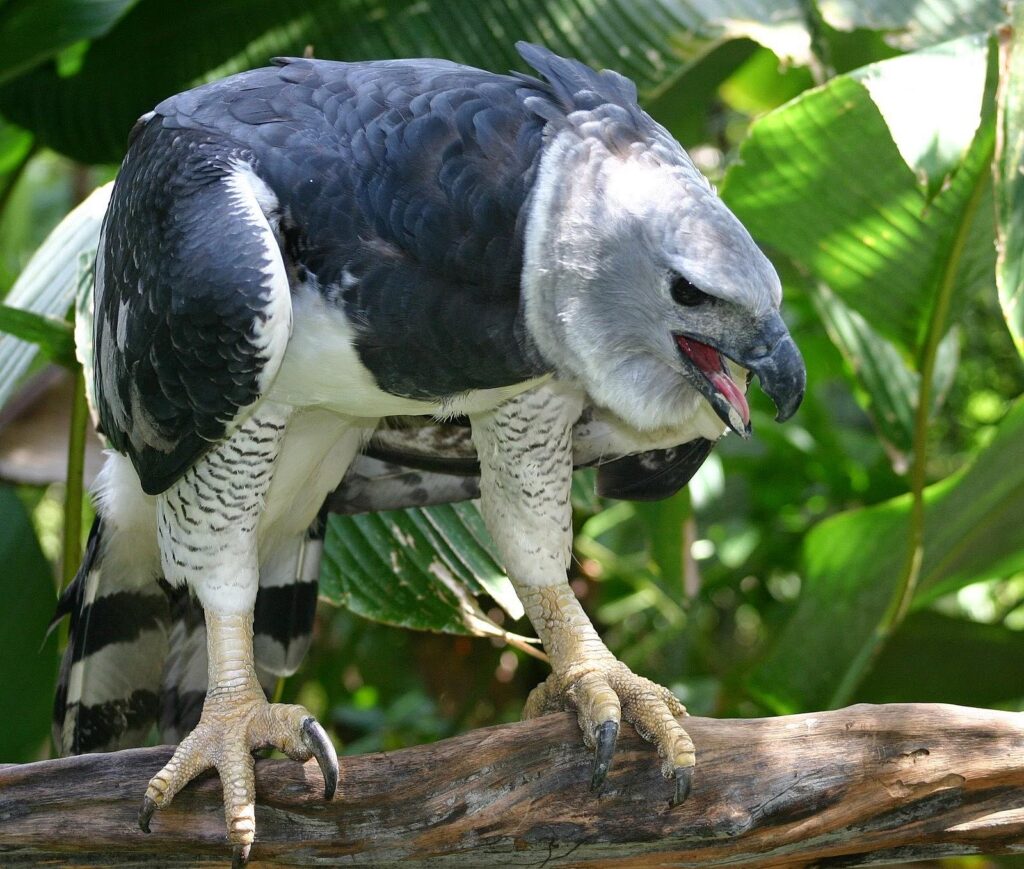
The harpy eagle (Harpia harpyja) is one of the world’s largest and most powerful eagles. With enormous talons, muscular legs, piercing eyes, and a distinctive feathered crest, this extraordinary bird is perfectly adapted to life in tropical rainforests.
Found across parts of Central and South America, the harpy eagle is an apex predator capable of capturing monkeys, sloths, and other tree-dwelling animals. Despite its impressive strength, this remarkable species faces increasing threats from deforestation and human activity.
1. Harpy Eagle Facts
| Feature | Details |
|---|---|
| Scientific name | Harpia harpyja |
| Family | Accipitridae |
| Habitat | Tropical forests |
| Distribution | Southern Mexico to northern Argentina |
| Body length | 89–105 cm |
| Wingspan | Up to approximately 2 meters |
| Female weight | 6.3–9 kg |
| Male weight | 3.8–5.4 kg |
| Diet | Sloths, monkeys, birds, reptiles |
| Lifespan | Approximately 25–35 years |
| Conservation status | Vulnerable (IUCN) |
Measurements and natural-history facts based on San Diego Zoo Wildlife Alliance. Conservation classification verified against the IUCN Red List. San Diego Zoo Animals & Plants+1
2. Extraordinary Strength and Powerful Talons
Harpy Eagle Bird Facts (Harpia harpyja) | Birdfact
The harpy eagle’s most remarkable weapons are its enormous feet and sharply curved talons.
Its rear talons can reach approximately 13 centimeters in length, making them comparable in size to the claws of a grizzly bear.
These adaptations allow the bird to seize powerful, fast-moving prey among the rainforest branches. Its strong legs provide the gripping force necessary to capture animals that may be relatively large compared with the eagle itself. San Diego Zoo Animals & Plants+1
3. Built for Hunting Inside Rainforests
Unlike many large eagles that soar over open landscapes, harpy eagles specialize in hunting among dense trees.
Their relatively short, broad wings and long tails enable controlled movement through the forest canopy.
A harpy eagle may remain motionless on a branch for an extended period, carefully watching for movement before launching a sudden attack.
Its hunting strategy combines patience, excellent eyesight, strength, and maneuverability.
4. What Does the Harpy Eagle Eat?
Sloths
Monkeys
Green iguana perching on a tree
Reptiles
Perú Jungle Expeditions | Tours y Amazonía
Large birds
Sloths and monkeys form a major part of its diet. Harpy eagles also hunt opossums, porcupines, iguanas, and occasionally large birds.
Females typically capture larger prey, while smaller males often hunt lighter animals. This difference allows pairs to exploit a wider range of food sources. San Diego Zoo Animals & Plants+1
5. Nesting and Family Life
Harpy eagles commonly build enormous nests high in the branches of mature rainforest trees.
A nest can measure around 1.5 meters across and may be reused for several years.
The female typically lays one or two eggs, but generally only one chick survives and is raised successfully.
Both parents care for their offspring, and the young eagle remains dependent on them for an unusually long period.
Because successful breeding occurs slowly, populations can take many years to recover from losses. San Diego Zoo Animals & Plants
6. Why the Harpy Eagle Matters
As an apex predator, the harpy eagle helps regulate populations of animals living in the tropical forest canopy.
Its survival depends on large areas of healthy, connected rainforest, making it an important indicator of forest ecosystem health.
Protecting harpy eagles also helps conserve habitats shared by thousands of other species.
7. Conservation Challenges
Deforestation Could Turn The Amazon Rainforest Into A Permanent Source Of Carbon
The harpy eagle is classified as Vulnerable on the IUCN Red List, with a decreasing population trend. IUCN Red List of Threatened Species
Its principal threats include:
- Destruction and fragmentation of tropical forests.
- Loss of large nesting trees.
- Illegal hunting and persecution.
- Slow reproduction and low population recovery rates.
Conservation efforts focus on preserving rainforest habitats, protecting nesting sites, monitoring populations, and educating communities about the species’ ecological importance.
8. Fascinating Harpy Eagle Facts
- The harpy eagle is Panama’s national bird.
- Females can weigh substantially more than males.
- Its enormous talons are among the largest of any living eagle.
- Its feathered crest can be raised into a striking crown-like shape.
- Its broad wings help it navigate dense tropical forests.
- It can capture sloths and monkeys directly from trees.
- Its name comes from the harpies of Greek mythology.
Conclusion
The harpy eagle represents one of nature’s most impressive examples of strength, precision, and adaptation. Its extraordinary hunting abilities make it a dominant predator of tropical forests, while its dependence on mature trees and extensive forest habitats highlights the importance of rainforest conservation.
Protecting this magnificent eagle means protecting the rich biodiversity of the forests it calls home.
WordPress SEO — Bin3aiah Birds
SEO title
Harpy Eagle: The Powerful Raptor of Tropical Forests
URL slug
harpy-eagle-powerful-raptor-tropical-forests
Meta description
Discover the harpy eagle, one of the world’s most powerful raptors. Explore its enormous talons, rainforest hunting skills, habitat, diet and conservation.
Copy
Focus keyword: Harpy Eagle
Secondary keywords: Harpy Eagle Facts, Harpia harpyja, Powerful Eagles, Rainforest Raptors, Harpy Eagle Diet, Tropical Forest Birds
Category: Birds of Prey / Eagles
Tags: Harpy Eagle, Eagles, Raptors, Birds of Prey, Tropical Rainforest, Amazon Rainforest, Wildlife, Harpia harpyja, Eagle Talons, Bird Conservation, Apex Predators, Rainforest Wildlife
Suggested featured image: A high-resolution photograph of an adult harpy eagle perched on a rainforest branch, clearly showing its crest, chest plumage, and large talons.
Featured image ALT text: Harpy eagle perched in a tropical rainforest displaying its powerful talons and distinctive feathered crest.
Suggested video resources: Harpy Eagle documentaries and Harpy Eagle rainforest behavior.
Scientific references: San Diego Zoo Wildlife Alliance · IUCN Red List · PBS Nature
Article status: prepared for WordPress; not published. Images are illustrative references and require reuse-permission verification before uploading.