


Views: 0
Hoopoe: The Distinctive Crested Bird
BIN3AIAH BIRDS | WILDLIFE & NATURE
Imitation and Learning: How Birds Master the Art of Mimicry | Birdfact
9
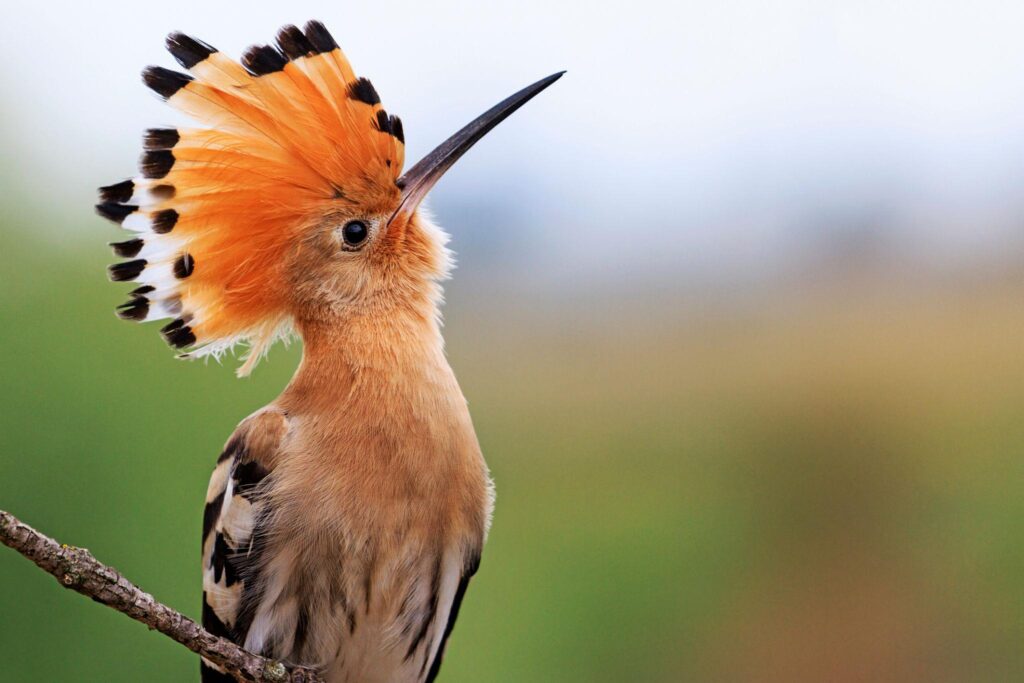
The Hoopoe (Upupa epops) is one of the world’s most recognizable birds, admired for its spectacular fan-shaped crest, warm orange-brown plumage, and boldly patterned black-and-white wings. With its slender, curved beak and distinctive three-note call, this remarkable bird stands out in grasslands, gardens, and open landscapes.
Known as the الهدهد (Al-Hudhud) in Arabic, the hoopoe also holds special cultural significance throughout the Middle East.
Quick facts
| Feature | Details |
|---|---|
| Common name | Eurasian or Common Hoopoe |
| Scientific name | Upupa epops |
| Family | Upupidae |
| Length | Approximately 26–32 cm |
| Wingspan | Approximately 42–46 cm |
| Diet | Insects, larvae, and other small animals |
| Habitat | Grasslands, farmland, gardens, open woodland |
| Distribution | Europe, Asia, and Africa |
| Conservation status | Least Concern globally |
Taxonomy and conservation information: Cornell Lab of Ornithology and British Trust for Ornithology. Birds of the World+2
1. A spectacular feathered crest
The hoopoe’s most extraordinary feature is its impressive crown of orange feathers tipped in black.
Although normally folded backward, the crest can be raised into a dramatic fan when the bird lands, becomes excited, or responds to a disturbance.
Its appearance is complemented by broad, black-and-white banded wings, a long bill that curves downward, and a unique undulating flight pattern often compared to a butterfly.
2. Habitat and geographical distribution
Hoopoes inhabit a remarkable range of environments, including savannas, agricultural fields, orchards, parks, and semi-arid landscapes.
They favor places with two essential features: open ground where they can locate insects and suitable cavities where they can nest.
Some populations migrate seasonally between Europe or northern Asia and warmer regions, while others remain in suitable areas throughout the year. Birds of the World+1
3. Feeding and hunting techniques
Eurasian hoopoe bird with distinctive black and white striped wings holding an insect in its beak.
The hoopoe primarily hunts insects and their larvae, including beetles, grasshoppers, crickets, and caterpillars.
Its specialized bill allows it to probe loose soil and extract prey hidden beneath the surface. Larger insects may be struck against the ground before being swallowed.
This feeding behavior makes the hoopoe an important insect predator in natural landscapes and agricultural areas.
4. Breeding and nesting behavior
Unlike birds that build elaborate exposed nests, hoopoes typically occupy existing cavities in trees, walls, rocks, and occasionally buildings.
During breeding, the female incubates the eggs while the male helps provide food. Both parents may contribute to feeding the growing chicks.
An especially interesting adaptation is the defensive secretion produced by nesting females and chicks, which has a strong odor and helps discourage threats.
5. The unforgettable hoop-hoop-hoop call
The hoopoe gets its English name from its characteristic repeated call, often described as hoo-poo-poo or hoop-hoop-hoop.
Males use this recognizable vocalization during the breeding season, making the bird easier to locate even when concealed by vegetation.
6. Cultural importance
The hoopoe has an especially distinguished place in Islamic tradition. It appears in Surah An-Naml (27:20–28), in the account of Prophet Sulayman (Solomon) and the people of Saba.
Its Arabic name, الهدهد, is familiar throughout the Arab world, where the bird is associated with this Quranic account.
7. Conservation and environmental importance
The Common Hoopoe is currently classified as Least Concern globally. Nevertheless, habitat loss, changes in farming practices, declining insect availability, and loss of nesting cavities can create pressures on local populations. BTO+1
Protecting open habitats, retaining mature trees, reducing unnecessary pesticide use, and conserving insect-rich environments can help support hoopoe populations.
Conclusion
With its magnificent crest, striking striped wings, specialized feeding behavior, and rich cultural history, the hoopoe is truly one of nature’s most fascinating birds.
Whether seen probing a grassy field or displaying its magnificent crown, this distinctive species offers a memorable glimpse into the beauty and diversity of birdlife.
WordPress SEO — Ready to Copy
| Field | Content |
|---|---|
| SEO title | Hoopoe: The Distinctive Crested Bird – Facts & Habitat |
| Focus keyword | Hoopoe bird |
| Slug | hoopoe-distinctive-crested-bird |
| Category | Birds / Bird Species |
| Secondary keywords | Eurasian Hoopoe, Upupa epops, hoopoe crest, hoopoe habitat, hoopoe diet |
| Image alt text | Eurasian Hoopoe displaying its orange fan-shaped crest and black-and-white wings |
Meta description:
Discover the Hoopoe bird, famous for its stunning crest. Explore its habitat, feeding habits, breeding behavior, unique call, and fascinating facts.
Copy
WordPress tags:
Hoopoe, Eurasian Hoopoe, Upupa epops, Crested Birds, Wildlife, Bird Species, Birdwatching, Ornithology, Bird Biology, Nature, Insectivorous Birds, Hoopoe Habitat, Bird Photography, Al Hudhud, الهدهد
Copy tags
Suggested featured image: A high-resolution photograph of a hoopoe with its crest fully raised, showing the orange feathers and striped wings against a softly blurred natural background.
Research references: Cornell Birds of the World · British Trust for Ornithology
Create copy-ready WordPress HTML with picturesCreate the Hoopoe post thumbnail