


Views: 5
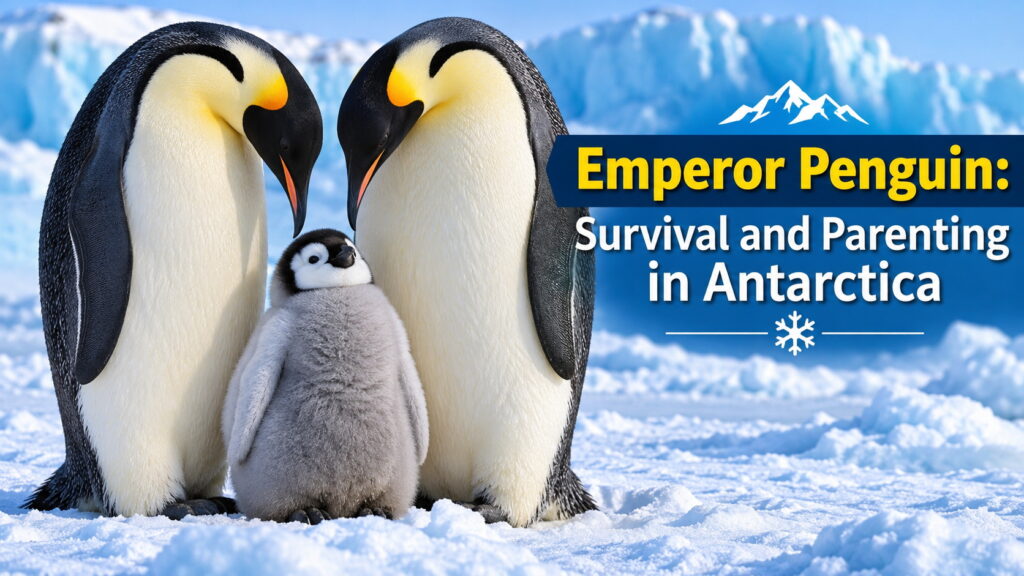
Emperor Penguin: Survival and Parenting in Antarctica
The emperor penguin (Aptenodytes forsteri) is the largest living penguin species and one of the most remarkable birds on Earth. Living in Antarctica, these extraordinary flightless birds endure freezing temperatures, powerful winds, long periods without food, and months of darkness.
What makes emperor penguins particularly fascinating is their breeding strategy. Unlike most birds, they raise their chicks during the Antarctic winter. Their survival depends on physical adaptations, group cooperation, and exceptional parental care.


1. Emperor Penguin Facts
| Scientific name | Aptenodytes forsteri |
|---|---|
| Height | Up to approximately 1.2 meters |
| Weight | Approximately 20–40 kg, depending on season and condition |
| Habitat | Antarctic sea ice and the Southern Ocean |
| Diet | Fish, krill, and squid |
| Eggs per breeding attempt | One |
| Incubation | Approximately 65–75 days |
| Conservation status | Endangered (IUCN, 2026) |
2. How Emperor Penguins Survive Extreme Cold
Antarctic winters are among the harshest conditions experienced by any breeding bird. Emperor penguins can endure temperatures below −40°C, accompanied by intense winds.
They survive through several specialized adaptations:
- Dense feathers: Closely packed feathers help trap insulating air and resist water penetration.
- Thick fat reserves: A layer of body fat conserves warmth and provides energy during fasting.
- Heat-saving circulation: Countercurrent heat exchange helps reduce heat loss through their feet and flippers.
- Compact body shape: Their relatively small surface area compared with body volume reduces heat loss.
- Huddling: Groups of penguins stand close together to shelter one another from cold winds.


The Importance of Huddling
Huddling is one of the emperor penguin’s most effective survival behaviors. Penguins gather into tightly packed groups, sometimes numbering hundreds or thousands of birds. Individuals gradually shift their positions, allowing those on the cold outer edges to move toward the more sheltered interior.
This group behavior helps reduce energy expenditure and supports survival during the long Antarctic winter.
3. Breeding During the Antarctic Winter
Emperor penguins have an unusual breeding calendar. They return to their breeding grounds as Antarctic autumn begins, usually around March or April.
Following courtship and pair formation, the female lays a single egg, generally in May or June.
Instead of constructing a nest, the male balances the egg on his feet and covers it with a specialized fold of skin called the brood pouch.
The female then departs for the ocean to feed, leaving the male responsible for incubation.
4. The Father’s Extraordinary Sacrifice
Male emperor penguins are famous for their demanding incubation duties. For approximately 65–75 days, the male protects the egg from direct contact with the ice while facing some of the coldest weather on Earth.
During this period he cannot leave the egg to hunt. Including the time spent traveling and courting before incubation, males may go for roughly four months without a proper meal, surviving on stored fat.
5. How Emperor Penguin Parents Raise Their Chicks
When the chick hatches, it is extremely vulnerable. Newly hatched chicks weigh only about 150–200 grams and cannot regulate their body temperature effectively.
The father continues to protect the chick inside his brood pouch until the female returns from feeding at sea.
When she arrives, she takes over brooding and feeding duties, allowing the exhausted male to return to the ocean.
Both parents subsequently alternate between foraging and caring for their growing chick. They use recognizable calls to locate their partners and offspring among thousands of birds.

6. How Emperor Penguin Chicks Grow
Young emperor penguins begin life covered in soft, grey down. While this covering provides insulation, it does not offer the waterproof protection required for swimming.
As chicks grow, their demand for food increases. Both parents travel between the breeding colony and feeding areas to collect fish, krill, and squid.
Older chicks gather in groups known as crèches. These groups can help them conserve warmth while adults are away feeding.
By Antarctic summer, generally around December or January, the chicks replace their down with waterproof juvenile feathers and prepare to enter the sea.

7. Emperor Penguins Are Remarkable Divers
Although emperor penguins cannot fly, they are highly adapted to underwater movement. Their streamlined bodies and strong flippers allow them to swim efficiently in search of food.
They commonly forage at depths of approximately 150–250 meters, although exceptionally deep dives have been recorded at more than 500 meters.
Their diet consists mainly of fish, particularly Antarctic silverfish, as well as Antarctic krill and squid. While hunting, emperor penguins face predators including leopard seals and killer whales.
8. Climate Change and the Future of Emperor Penguins
Emperor penguins depend heavily on stable Antarctic sea ice. Their eggs and chicks require a secure frozen platform throughout much of the breeding season.
If sea ice breaks apart before chicks develop waterproof feathers, large numbers of young penguins may drown or die from exposure.
On April 9, 2026, the International Union for Conservation of Nature (IUCN) announced that the emperor penguin had been reclassified from Near Threatened to Endangered.
The assessment projects that the species could lose approximately half its population by the 2080s as climate change alters its breeding and feeding habitat.
Conservation efforts therefore focus on reducing greenhouse gas emissions, protecting Antarctic ecosystems, monitoring colonies, and limiting other pressures on Southern Ocean wildlife.
9. Why Emperor Penguins Are Important
Emperor penguins help scientists understand environmental changes in Antarctica. Their survival depends on the condition of sea ice, the availability of marine food, and the health of the Southern Ocean ecosystem.
Because they are so closely connected to these conditions, changes in emperor penguin populations can provide important clues about the wider effects of climate change.
Conclusion: An Extraordinary Example of Survival and Parenthood
Emperor penguins demonstrate some of the most remarkable survival and parenting behaviors in the bird world. From fathers protecting eggs during freezing winter storms to parents traveling long distances to feed their young, every stage of their lives involves extraordinary endurance.
Yet even these highly adapted birds are vulnerable to rapid environmental change. Protecting Antarctic sea ice and its surrounding ecosystems will be essential to giving future generations of emperor penguins a chance to thrive.
Sources and Further Reading
- Australian Antarctic Program — Emperor Penguin
- Australian Antarctic Program — Breeding Cycle
- IUCN — Emperor Penguin Endangered Status, April 2026
Published by Bin3aiah Birds — Exploring the fascinating world of birds, their behavior, habitats, and conservation.