


Views: 1
Shoebill: The Unusual Bird of African Wetlands
Shoebill (Balaeniceps Rex) Guide: Diet, Habitat & Identification – Plantiary
7 Scary Bird Species | Holbrook Travel
Shoebill: Mysteries of the Elusive African Bird
9
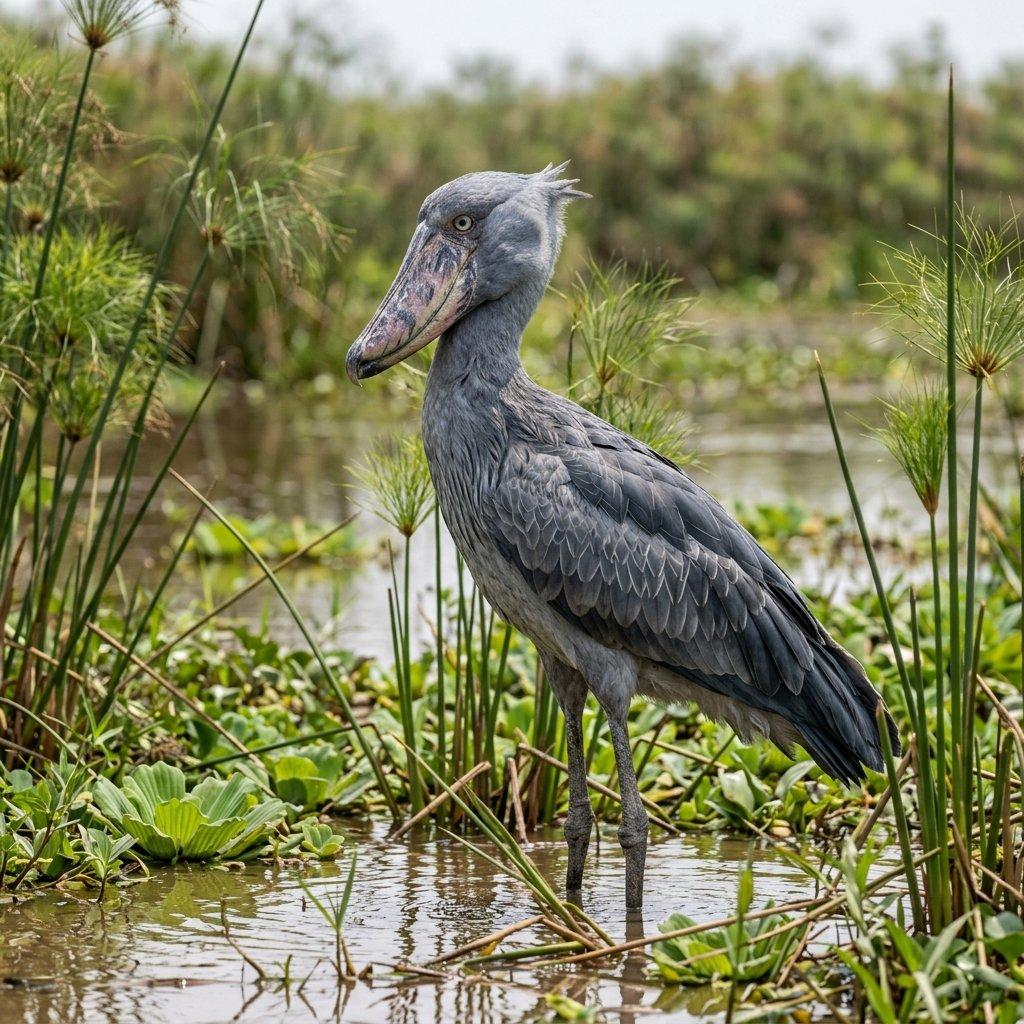
The shoebill (Balaeniceps rex) is one of Africa’s most extraordinary birds. With its enormous shoe-shaped bill, piercing eyes, towering height, and almost prehistoric appearance, this remarkable wetland hunter looks like a creature from another age.
Despite often being called the shoebill stork, it belongs to its own family, Balaenicipitidae, and is more closely related to pelicans than true storks. BirdLife International+1
Quick facts
| Feature | Details |
|---|---|
| Scientific name | Balaeniceps rex |
| Family | Balaenicipitidae |
| Height | Approximately 110–150 cm |
| Habitat | Freshwater swamps and papyrus wetlands |
| Distribution | Eastern and central Africa |
| Diet | Lungfish, catfish, frogs, reptiles |
| Lifespan | Up to approximately 35 years in the wild |
| Conservation status | Vulnerable (IUCN) |
| Population | Estimated 3,300–5,300 mature individuals |
BirdLife International+2
What makes the shoebill unusual?
1. An enormous shoe-shaped bill
Its most recognizable feature is a broad bill measuring approximately 30 cm. The powerful hooked tip and sharp edges help it grip slippery fish and capture surprisingly large prey.
2. A patient ambush hunter
Shoebills can stand almost completely motionless for extended periods, watching the water for movement. When an opportunity appears, they suddenly plunge forward, using a hunting technique known as freeze and seize.
3. A prehistoric appearance
Their slate-grey feathers, small head crest, powerful bill, and intense gaze give them a dinosaur-like appearance. However, shoebills are modern birds, not surviving prehistoric species.
4. A remarkable bill-clattering sound
Shoebills can rapidly clap their bills together, producing a loud, mechanical rattling sound. This behavior is especially associated with nest interactions and communication.
Habitat and distribution
Capture Zambia’s Beauty: A Photographer’s Guide to Stunning Locations
Uganda – Shoebills to Gorillas – Naturetrek
From Canoes, Fishermen Guard Africa’s Famous Shoebills Against Poachers | Audubon
11
Shoebills inhabit extensive freshwater wetlands, particularly papyrus swamps and seasonally flooded marshes.
Their range includes South Sudan, Uganda, Zambia, Tanzania, Rwanda, and parts of central Africa. They depend on healthy wetlands with suitable shallow-water feeding areas. BirdLife International+1
Diet and hunting
The shoebill is a carnivorous predator that mainly eats fish, especially African lungfish and catfish. It also captures frogs, water snakes, and occasionally small crocodiles.
Its large bill is an effective adaptation for handling substantial prey. Rather than chasing fish through the water, the shoebill typically waits quietly and attacks with a sudden forward movement.
Breeding and behavior
Shoebills are generally solitary and territorial birds. Breeding pairs construct large nests on floating or dense wetland vegetation.
Females typically lay one to three eggs, and both parents help protect and feed their chicks. Although multiple chicks may hatch, only one usually survives to fledging. Parents also use their bills to carry water to the nest, helping cool eggs and chicks in hot conditions. BirdLife International+1
Conservation: Why shoebills need protection
Vulnerable — IUCN
Population decreasing
The shoebill faces threats from wetland degradation, hunting, human disturbance around nesting areas, and illegal live-bird trade.
The IUCN assessment estimates 3,300–5,300 mature individuals, with a declining population trend. Protecting freshwater wetlands and reducing disturbance are essential to the species’ survival. San Diego Zoo Animals & Plants+1
Conclusion
The shoebill is an extraordinary example of how birds adapt to specialized environments. Its unusual appearance, patient hunting strategy, and dependence on African wetlands make it one of the continent’s most fascinating species.
Protecting the shoebill also helps preserve the rich wetland ecosystems that support countless other animals.
WordPress SEO — Bin3aiah Birds
SEO title
Shoebill: The Unusual Bird of African Wetlands
Copy
URL slug
shoebill-unusual-bird-african-wetlands
Copy
Meta description
Discover the shoebill, Africa’s remarkable wetland bird. Explore its giant bill, unique hunting behavior, habitat, diet, and conservation status.
Copy
Focus keyphrase: Shoebill bird
Category: Birds / Wetland Birds
Tags: Shoebill, Balaeniceps rex, African Birds, Wetland Birds, Shoebill Stork, Rare Birds, Wildlife, Bird Conservation, African Wildlife, Bird Facts
Suggested image alt text: Shoebill bird with an enormous shoe-shaped bill standing in an African wetland.
Featured image recommendation: A vertical full-body photograph of a shoebill standing among green papyrus reeds, showing its distinctive bill, long legs, and grey plumage.
Reference sources: BirdLife International, San Diego Zoo, IUCN Red List.