
Views: 8
Atlantic Puffin: Life Between Ocean and Cliffs
Bin3aiah Birds | Seabirds & Marine Wildlife | 8-minute read


9
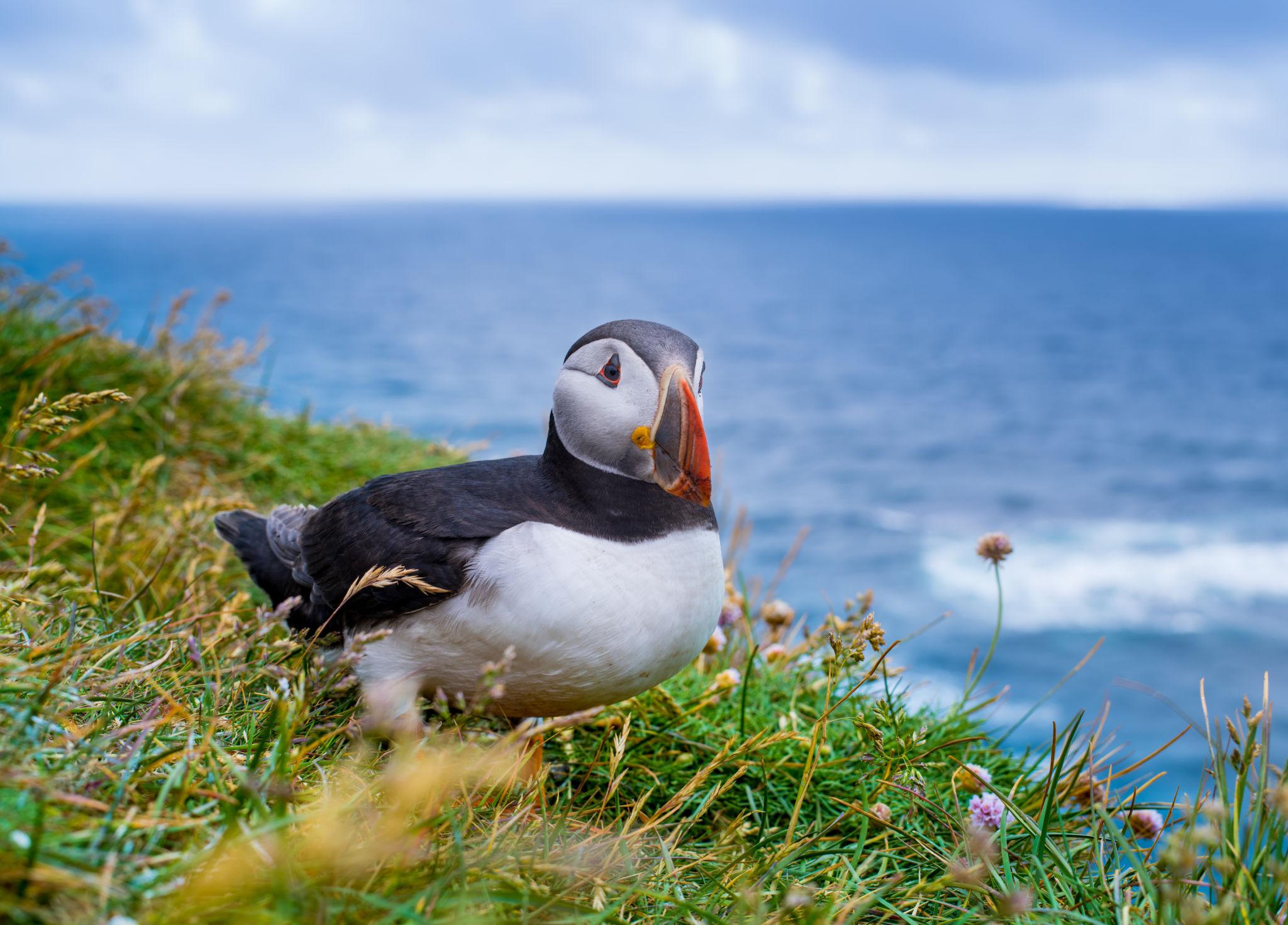
The Atlantic puffin (Fratercula arctica) is one of the most recognizable seabirds in the Northern Hemisphere. With its colorful beak, black-and-white plumage, and bright orange feet, this remarkable bird is sometimes affectionately called the “clown of the sea” or “sea parrot.”
Yet behind its charming appearance lies an extraordinary survival story. Atlantic puffins spend most of their lives on the open ocean, navigating waves, diving for fish, and enduring harsh weather. Only during the breeding season do they return to land, gathering in colonies along dramatic coastal cliffs and remote islands.
Their lives reveal a fascinating balance between two very different environments: the vast Atlantic Ocean and the rugged cliffs where they raise their young.
1. Atlantic Puffin: Quick Facts
| Feature | Details |
|---|---|
| Scientific name | Fratercula arctica |
| Family | Alcidae (auks) |
| Habitat | North Atlantic Ocean, islands and sea cliffs |
| Body length | 26–29 cm |
| Wingspan | Approximately 53 cm |
| Weight | Approximately 310–550 g |
| Diet | Small fish and marine invertebrates |
| Eggs | Usually one per breeding season |
| Lifespan | Often 20–30 years |
| Conservation status | Vulnerable (IUCN global classification) |
These measurements and conservation details are documented by Cornell Lab of Ornithology and the Marine Conservation Society.
All About Birds
+1
2. A Life Spent Mostly at Sea
Unlike many familiar coastal birds, Atlantic puffins are genuine ocean specialists.
For much of the year, they live far from land, floating on the sea surface, diving underwater, and searching for food. Their compact bodies and waterproof feathers help them survive in the challenging conditions of the North Atlantic.
During winter, puffins disperse across extensive marine areas. Tracking studies show that some birds from British colonies travel far into the Atlantic, while others remain in the North Sea.
Their winter appearance is also noticeably different. The brilliant breeding-season bill becomes smaller and less colorful, and the facial plumage darkens.
Fratercula Arctica
+1
3. Built for Swimming and Diving

One of the puffin’s most impressive abilities is its underwater movement.
Although puffins can fly through the air, their wings also function as powerful underwater propellers. Instead of relying primarily on their feet for propulsion, they move their wings through the water in a motion resembling flight.
Their webbed feet help them steer.
Atlantic puffins can reach depths of approximately 60 meters, although most feeding dives take place much closer to the surface.
This combination of aerial flight and underwater agility allows them to reach feeding areas and capture fast-moving prey.
All About Birds
+1
4. The Remarkable Fish-Carrying Beak
Perhaps the Atlantic puffin’s most famous behavior is its ability to carry multiple fish in its beak simultaneously.
Puffins feed on small schooling fish, including sand eels, capelin, sprats, and juvenile herring.
Their specialized mouths contain backward-pointing structures that help secure captured fish while the bird opens its beak to catch additional prey.
This adaptation is particularly valuable during the breeding season, when adults must transport food from the sea to their hungry chicks.
A single successful fishing trip can therefore provide several fish without the puffin repeatedly returning to its nesting burrow.
All About Birds
+1
5. Returning to the Cliffs

Each spring, Atlantic puffins return to breeding colonies on islands and coastal cliffs around the North Atlantic.
Important breeding regions include Iceland, Norway, the Faroe Islands, the British Isles, Greenland, and eastern Canada.
These nesting sites often feature steep cliffs, grassy slopes, rocky crevices, and relatively limited access for land-based predators.
Puffins commonly construct burrows in the soil using their bills and feet. Some instead nest between rocks or beneath boulders.
A breeding pair may return to the same burrow in successive years, repairing and reusing its familiar nesting site.
All About Birds
+1
6. Courtship and Long-Term Partnerships
Atlantic puffins often maintain the same breeding partnership across multiple years.
One of their best-known courtship behaviors is called billing, in which two birds gently rub or tap their colorful beaks together.
This behavior helps reinforce the pair bond and is frequently observed around breeding colonies.
Puffins also communicate through body posture, calls, and territorial displays.
Although colonies can be crowded and noisy, each pair maintains its own nesting space and may defend the entrance against neighboring birds.
All About Birds
+1
7. Raising a Puffling

The Atlantic puffin’s reproductive strategy emphasizes parental investment rather than producing many offspring.
A female normally lays just one egg each breeding season.
Both parents share incubation responsibilities, which generally last around 36–45 days. After hatching, the chick—often called a puffling—remains protected inside the burrow.
The parents make repeated fishing trips to provide nourishment until the young bird develops sufficiently to leave its nest.
After roughly six weeks, depending on the colony and environmental conditions, the young puffin is typically ready to depart.
Many pufflings leave their burrows at night, heading toward the sea, where they begin their independent lives.
All About Birds
+1
8. An Extraordinary Annual Journey

The Atlantic puffin’s annual life cycle connects two essential environments.
In spring and summer, breeding birds return to land, establish territories, incubate eggs, and feed chicks.
After the breeding season, they leave their colonies and disperse into the ocean.
For months, they must find food across vast marine areas while avoiding storms, predators, and other hazards.
Young birds may spend several years at sea before returning to breeding colonies as prospective adults.
This remarkable lifestyle makes Atlantic puffins highly dependent on both healthy marine food webs and secure coastal breeding habitats.
Audubon Field Guide
+1
9. Threats to Atlantic Puffins
Despite their exceptional adaptations, Atlantic puffins face significant conservation challenges.
The species is classified globally as Vulnerable, and many breeding populations have experienced serious declines.
Major threats include:
- Climate change: Changing ocean temperatures and marine ecosystems can reduce access to suitable prey.
- Food shortages: Declining or shifting populations of small fish can affect chick survival.
- Overfishing: Competition for important forage fish may reduce food availability.
- Introduced predators: Rats and other mammals can threaten eggs and chicks on nesting islands.
- Marine pollution: Oil spills and other pollution can damage marine habitats and harm seabirds.
The RSPB reports that the UK’s puffin population declined by approximately 23% over the two decades assessed in the 2023 Seabirds Count census.
Fratercula Arctica
+2
10. Protecting the Future of Puffins

Conserving Atlantic puffins requires protecting the ocean as well as the cliffs where they breed.
Effective conservation measures include safeguarding nesting colonies, managing introduced predators, reducing marine pollution, protecting important forage-fish populations, and monitoring breeding success.
Conservation projects have already demonstrated that targeted intervention can make a difference.
One notable example is Audubon’s long-running puffin restoration work in Maine, which helped reestablish breeding birds on islands where they had previously disappeared.
Audubon Field Guide
11. Fascinating Facts About Atlantic Puffins

Their beaks change with the seasons.
The colorful outer bill structures are shed after breeding, giving puffins a more subdued winter appearance.

They often reunite with familiar partners.
Many puffins maintain long-term pair bonds and return to the same nesting locations.

Their wings work in two worlds.
Short, powerful wings allow them to fly through air and propel themselves underwater.

They build hidden underground homes.
Burrows shelter their single egg and chick from harsh weather and some predators.
Conclusion: A Bird of Two Worlds
The Atlantic puffin is much more than a colorful seabird. It is an extraordinary example of adaptation, endurance, and the delicate relationship between marine wildlife and coastal ecosystems.
From diving beneath ocean waves to raising a single chick in a cliffside burrow, nearly every aspect of its life reflects the challenges of surviving between land and sea.
Protecting these birds means preserving not only their breeding cliffs but also the rich marine environments that sustain them.
The future of Atlantic puffins will depend on how successfully we protect both worlds.
WordPress SEO — Ready to Copy
SEO Title Copy
Atlantic Puffin: Life Between Ocean and Cliffs
Slug Copy
atlantic-puffin-life-between-ocean-and-cliffs
Meta Description Copy
Discover the Atlantic puffin’s remarkable life at sea, cliffside nesting habits, colorful beak, diving skills, diet, breeding cycle and conservation.
Focus Keyphrase Copy
Atlantic Puffin
Secondary Keywords Copy
Atlantic puffin habitat, puffin nesting, puffin diet, Fratercula arctica, puffin conservation, Atlantic seabirds
Category Copy
Birds / Seabirds
Image Alt Text Copy
Atlantic puffin with its colorful orange beak standing on a grassy coastal cliff above the North Atlantic Ocean
WordPress tags
Atlantic Puffin, Puffins, Fratercula arctica, Seabirds, Marine Birds, North Atlantic, Puffin Habitat, Puffin Nesting, Puffin Diet, Puffin Breeding, Bird Conservation, Ocean Wildlife, Coastal Birds, Wildlife Photography, Bird Facts, Birdwatching, Nature, Marine Ecosystems, Iceland Birds, Bin3aiah Birds
Copy all tags
Reliable References
- Cornell Lab of Ornithology — Atlantic Puffin Life History
- RSPB — Puffin Facts and Conservation
- National Audubon Society — Atlantic Puffin
- Marine Conservation Society — Atlantic Puffin
Publishing note: The photographs above are visual references. Before uploading them to WordPress, verify their reuse licenses or obtain permission. The article text is ready for publication.
Create full copy-ready WordPress HTML with imagesCreate Atlantic Puffin post thumbnail