
Views: 8
Southern Cassowary: Life in the Tropical Rainforest
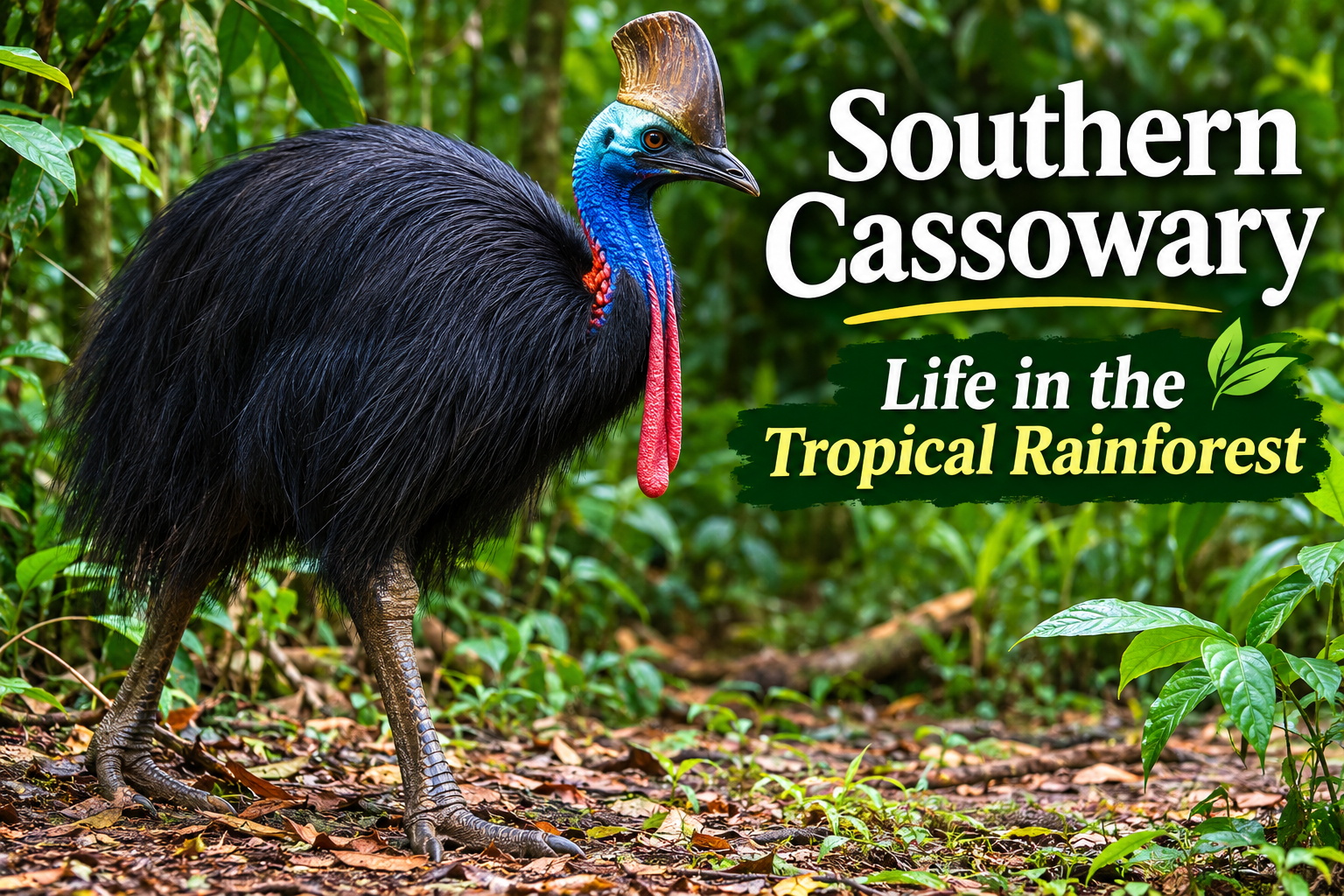
The Southern Cassowary (Casuarius casuarius) is one of the most remarkable birds in the tropical rainforests of Australia and New Guinea. With its powerful legs, glossy black feathers, brilliant blue neck and distinctive helmet-like casque, this enormous flightless bird has an almost prehistoric appearance.
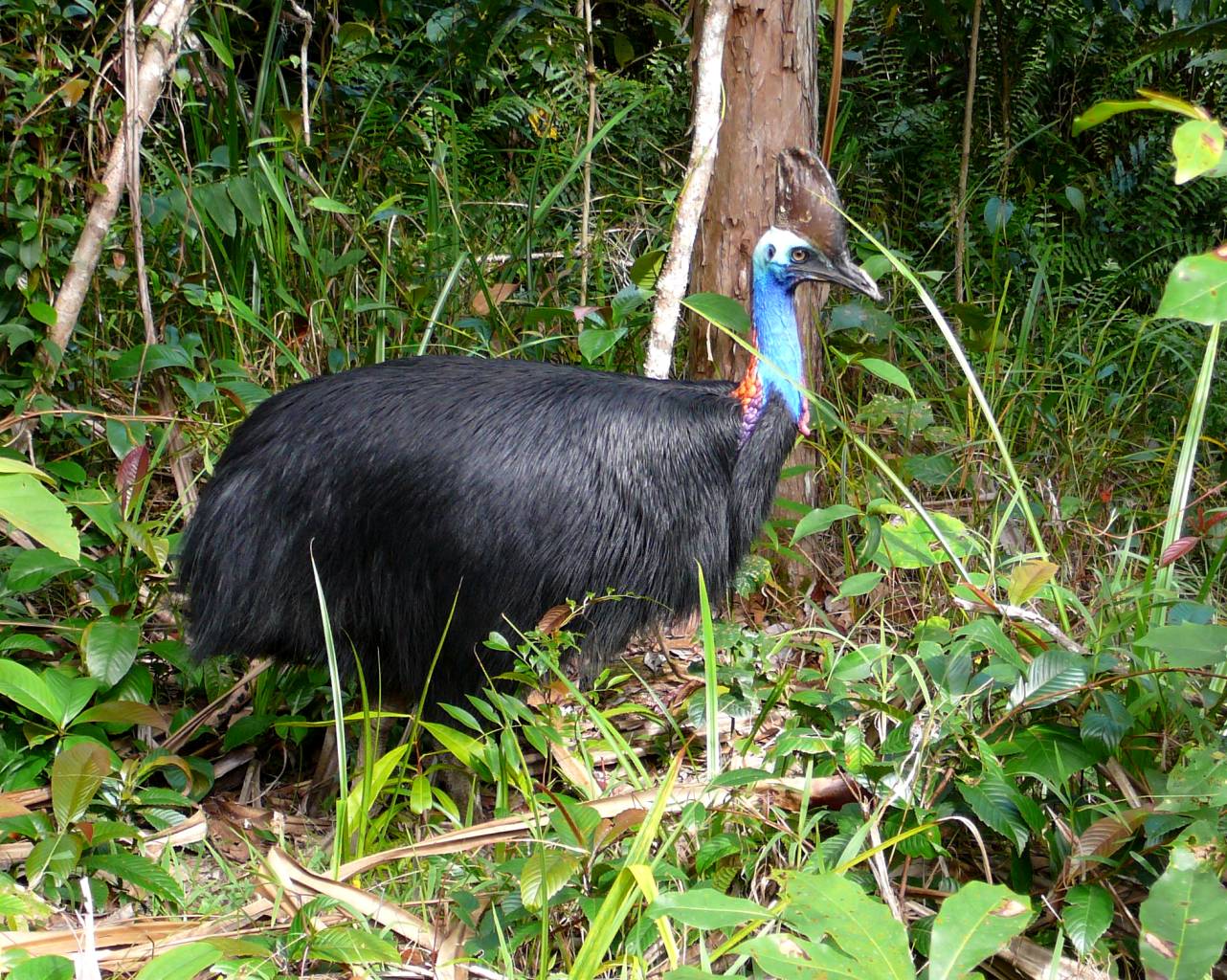
Despite its imposing appearance, the cassowary is generally a shy forest inhabitant. Its greatest contribution to the ecosystem is not its strength but its important role in spreading the seeds of rainforest plants.
Southern Cassowary: Quick Facts
| Feature | Details |
|---|---|
| Scientific name | Casuarius casuarius |
| Family | Casuariidae |
| Distribution | Northeastern Australia and New Guinea |
| Habitat | Tropical rainforests and nearby habitats |
| Height | Approximately 1.5–2 metres |
| Diet | Primarily fruit, with occasional animal matter |
| Lifestyle | Mostly solitary |
| Global conservation status | Least Concern (IUCN) |
1. A Bird Perfectly Adapted to Rainforest Life
The Southern Cassowary is among the largest living birds. Its body is covered in coarse, hair-like black feathers that help it travel through dense rainforest vegetation.
Its strong legs support its heavy body and allow it to move across uneven forest floors. Each foot has three toes, including an inner toe with a long, sharp claw that can be used for defense.
The bird’s striking blue head and neck, red wattles and tall casque make it instantly recognizable. Females are generally larger than males and may have brighter coloring.

What Is the Cassowary’s Casque For?
The casque is a tall, keratin-covered structure on top of the bird’s head. Scientists have proposed several possible functions, including communication, display and assistance in moving through vegetation.
Its precise biological roles are still being investigated.
2. Where Southern Cassowaries Live
Southern Cassowaries inhabit the tropical rainforests of northeastern Queensland, Australia, as well as parts of New Guinea.
They prefer environments with dense vegetation, suitable shelter, water and a dependable supply of fruiting plants. Cassowaries may also move through forest edges and other connected habitats while searching for food.
Large, connected forest areas are particularly important because these birds need room to forage and move safely between food sources.
3. The Rainforest’s Natural Seed Disperser
The Southern Cassowary is primarily a fruit-eating bird. It collects fallen fruits from the rainforest floor and can swallow many fruits whole, including some that are too large for smaller birds to consume.
As the cassowary travels through its habitat, seeds pass through its digestive system and are deposited elsewhere in its droppings.
This process helps plants colonize new areas and supports rainforest regeneration. Some large-seeded rainforest species are particularly dependent on cassowaries for effective seed dispersal.
Ecological importance: By moving seeds across the forest, cassowaries help maintain plant diversity, encourage regeneration and support the long-term health of tropical rainforest ecosystems.
4. Solitary Behavior and Communication
Southern Cassowaries spend much of their lives alone, moving through forest territories or home ranges in search of food.
They communicate through grunts and low-frequency booming calls. These deep vocalizations are particularly useful in rainforest environments, where dense vegetation limits visibility.
Although they are capable of powerful movements, cassowaries generally avoid unnecessary confrontations with people and other animals.
5. Male Cassowaries Raise the Chicks
One of the most fascinating aspects of cassowary biology is its unusual parenting system.
After mating, the female typically lays a clutch of three to five large, greenish eggs in a nest on the forest floor.
The male takes responsibility for incubating the eggs, usually for around 50 days. After hatching, he continues protecting and guiding the chicks while teaching them where to find food.
Young cassowaries have brown-and-cream striped plumage that provides camouflage among fallen leaves and vegetation. Their familiar dark feathers and vivid neck coloration develop as they mature.
6. Powerful Legs and Defensive Abilities
The Southern Cassowary has powerful legs and sharp claws that make it capable of causing serious injuries if threatened.
However, this does not mean cassowaries actively seek conflict. Many encounters occur without aggression when people maintain a respectful distance.
Visitors to cassowary habitats should never feed the birds, approach their chicks, corner them or attempt to touch them. Feeding can encourage cassowaries to approach people and increase the likelihood of dangerous encounters.

7. Conservation Challenges
Globally, the Southern Cassowary is classified as Least Concern by the International Union for Conservation of Nature (IUCN). However, the Australian population is listed as Endangered under national environmental legislation.
Important threats include:
- Habitat loss: Rainforest clearing reduces suitable feeding and breeding areas.
- Forest fragmentation: Roads and development separate cassowary habitats.
- Vehicle collisions: Birds can be killed while crossing roads.
- Dog attacks: Uncontrolled dogs can injure or kill cassowaries, especially young birds.
- Human feeding: Feeding changes natural behavior and increases contact with people.
Conservation programs focus on habitat protection, rainforest restoration, wildlife corridors, responsible road use and public education.
8. Why Protecting Cassowaries Protects the Forest
The Southern Cassowary is far more than a visually spectacular bird. It is an important part of the ecological network that maintains healthy tropical rainforests.
By consuming fruit and distributing seeds, it helps numerous plant species reproduce and spread across the landscape.
Protecting cassowaries also helps protect the forests, plants and other wildlife that share their habitat.
Conclusion
The Southern Cassowary represents one of nature’s most extraordinary adaptations to tropical rainforest life. Its powerful body, colorful appearance, unusual parental behavior and essential seed-dispersal role make it a fascinating example of the relationships between wildlife and ecosystems.
Preserving this remarkable bird is an important step toward ensuring that the tropical rainforests of Australia and New Guinea remain healthy for future generations.
Sources and Further Reading
- BirdLife Australia
- Queensland Government – Environment
- Australian Government – Environment
- IUCN Red List
Image Credits
- Rainforest photograph: Dave Kimble – Public Domain.
- Head close-up: Frank Wouters – CC BY 2.0. License. No modifications to the original image.
- Full-body photograph: Derrick Coetzee – CC0.