

Views: 6
Mandarin Duck: Colorful Plumage and Fascinating Behavior
The Mandarin Duck (Aix galericulata) is one of the most colorful and visually remarkable waterbirds in the world. Native to East Asia, this beautiful duck is celebrated for its extraordinary plumage, elaborate courtship displays, and unusual tree-nesting behavior.

1. Appearance: Nature’s Colorful Masterpiece
Male and female Mandarin Ducks look dramatically different, an example of sexual dimorphism.
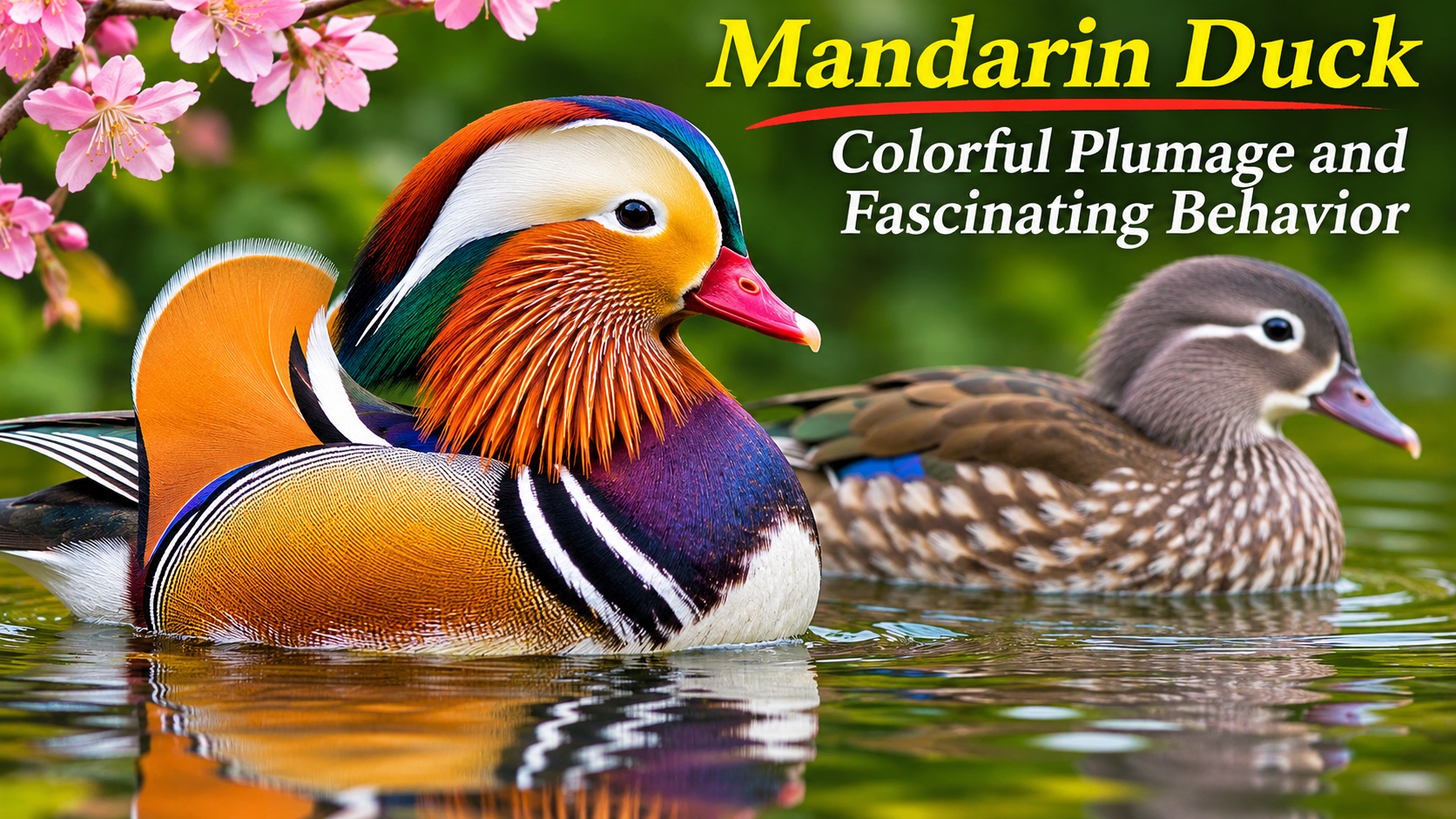
Male Mandarin Duck
The breeding male is famous for his ornate feather patterns and vibrant colors. Some of his most distinctive features include:
- Bright orange, sail-shaped feathers rising from the wings.
- Shimmering green and purple plumage.
- A reddish bill and prominent white facial markings.
- Elaborate orange and cream feathers around the head and neck.
- A dark chest, patterned flanks, and distinctive crest.

Female Mandarin Duck
The female has more subtle grayish-brown feathers, a distinctive white eye-ring, and a narrow white stripe extending behind the eye. Her understated plumage provides camouflage while nesting.

Following the breeding season, males undergo a molt and temporarily develop less colorful eclipse plumage.
2. Natural Habitat and Distribution
Mandarin Ducks originate from East Asia, including parts of China, Japan, Korea, and eastern Russia. They prefer wooded freshwater habitats such as rivers, ponds, lakes, and wetlands surrounded by mature trees.
These trees are especially important because Mandarin Ducks often nest in natural cavities above the ground.
Some native populations migrate seasonally. Introduced populations have also established themselves in parts of Europe, particularly the United Kingdom.

3. Fascinating Courtship Behavior
The Mandarin Duck is especially famous for its courtship rituals. During the breeding season, males attract females by displaying their colorful feathers, raising their crests, and performing distinctive movements.
Mandarin Duck pairs have become powerful cultural symbols of love, devotion, and marital happiness in several East Asian traditions.
However, despite the popular belief that Mandarin Ducks always mate for life, their real pairing behavior is more complex. Pair bonds can vary between breeding seasons.
4. Nesting in Trees: An Extraordinary Survival Strategy
Unlike many familiar ducks that nest on the ground, Mandarin Ducks commonly use tree cavities as nesting sites.
A female typically lays around 9–12 eggs and incubates them for approximately one month.
After hatching, the young ducklings must leave their elevated nest. The mother calls from below, encouraging them to jump from the tree to the ground.
Their small size, light weight, and soft down help cushion these remarkable jumps. The ducklings then follow their mother toward nearby water, where they begin feeding.
5. Diet and Feeding Habits
Mandarin Ducks are omnivorous, eating a mixture of plant material and small animals. Their diet changes throughout the seasons.
- Seeds, acorns, and grains.
- Aquatic plants and other vegetation.
- Insects and insect larvae.
- Snails and small aquatic invertebrates.
They often feed in shallow water, along wetland edges, and among vegetation. Their varied diet helps them adapt to different seasonal conditions.
6. Mandarin Duck Quick Facts
| Feature | Information |
|---|---|
| Scientific Name | Aix galericulata |
| Family | Anatidae |
| Native Region | East Asia |
| Preferred Habitat | Wooded wetlands and freshwater |
| Diet | Omnivorous |
| Nesting Location | Tree cavities |
| Typical Clutch | 9–12 eggs |
| Conservation Status | Least Concern |
7. Conservation and Environmental Importance
The Mandarin Duck is globally classified as a species of Least Concern. Nevertheless, some native populations face habitat destruction, forest loss, and reduced availability of suitable nesting trees.
Preserving mature woodland near freshwater habitats is particularly important for protecting this species.
Healthy wetlands also benefit many other organisms, including fish, amphibians, aquatic insects, and other waterbirds.
8. Why Mandarin Ducks Are So Special
The Mandarin Duck combines striking beauty with fascinating natural behavior. From its magnificent breeding plumage to its unusual tree nests and daring young ducklings, this bird demonstrates the extraordinary diversity of wildlife.
Its long-standing cultural association with love and partnership adds another dimension to its appeal.
Conclusion
The Mandarin Duck is far more than a colorful waterbird. Its elaborate courtship rituals, unusual nesting behavior, adaptable diet, and stunning appearance make it one of the most remarkable ducks in the world.
Protecting wooded wetlands and freshwater ecosystems will help ensure that future generations can continue to admire this extraordinary species.
References and Further Reading
- Animal Diversity Web – Mandarin Duck
- British Trust for Ornithology – Mandarin Duck
- Honolulu Zoo – Mandarin Duck
- Wikimedia Commons – Mandarin Duck Images and Licenses
Published by Bin3aiah Birds | Discover the Beauty of Wildlife and Nature