

Views: 5
African Fish Eagle: The Iconic Hunter of African Waterways

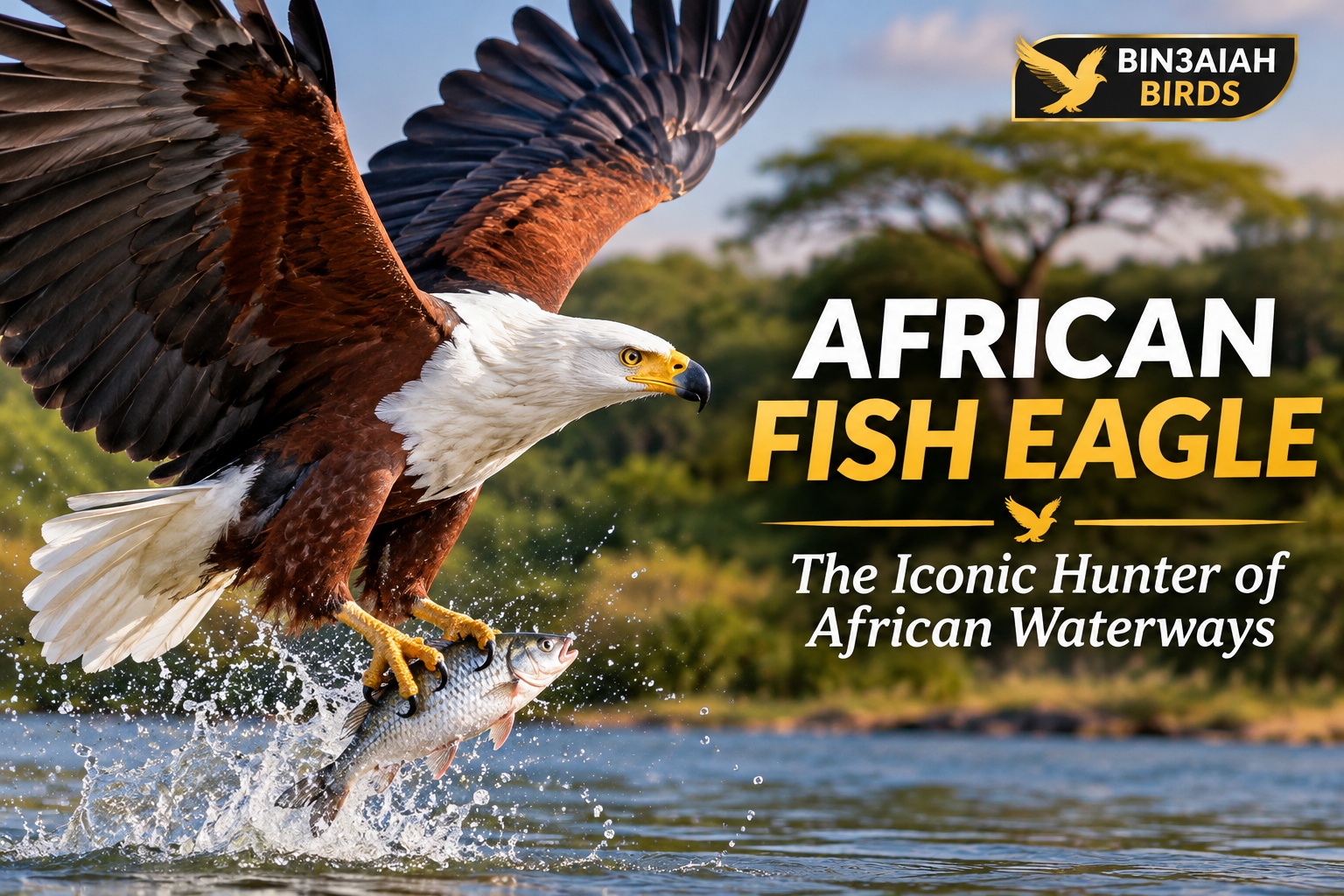
The African fish eagle is one of Africa’s most recognizable birds of prey. With its brilliant white head, chestnut-brown body, powerful wings and distinctive call, this magnificent raptor has become a symbol of the continent’s rivers, lakes and wetlands.
Its exceptional eyesight and specialized fishing abilities allow it to capture prey with remarkable precision. Often called the Voice of Africa, the African fish eagle represents the extraordinary wildlife diversity of African aquatic ecosystems.
1. African Fish Eagle: Quick Facts
| Characteristic | Information |
|---|---|
| Common name | African Fish Eagle |
| Scientific name | Icthyophaga vocifer (formerly Haliaeetus vocifer) |
| Family | Accipitridae |
| Body length | Approximately 63–75 cm |
| Wingspan | Up to approximately 2.4 metres |
| Weight | Approximately 2–3.6 kg |
| Distribution | Sub-Saharan Africa |
| Diet | Primarily fish |
| Conservation status | Least Concern |
2. Appearance and Physical Characteristics
Adult African fish eagles are easily identified by their contrasting plumage and imposing appearance. Their broad wings are particularly well suited to soaring and controlled flight above waterways.
- White head, neck, upper chest and tail.
- Rich chestnut-brown body feathers.
- Dark flight feathers and broad wings.
- Strong hooked beak adapted for tearing food.
- Powerful feet with curved talons.
- Excellent eyesight for detecting prey.
Females are generally larger and heavier than males. Juveniles have mottled brown plumage and gradually develop the distinctive adult coloration as they mature.
3. Habitat and Geographic Distribution
The African fish eagle inhabits suitable aquatic environments across much of sub-Saharan Africa. It prefers locations where fish are abundant and trees provide suitable hunting perches and nesting sites.
- Freshwater lakes and large rivers.
- Wetlands and floodplains.
- Reservoirs and dams.
- Coastal lagoons and estuaries.
- Swamps and mangrove environments.
Well-known habitats include Lake Victoria, Lake Naivasha, the Okavango Delta, the Chobe River and the waterways of the Zambezi region.
4. Hunting Techniques and Fishing Abilities

The African fish eagle typically hunts from an elevated branch overlooking the water. Once it detects a suitable fish, it launches from its perch and descends toward the surface.
- Observation: The eagle scans the water for potential prey.
- Approach: It flies low toward the selected fish.
- Capture: It extends its feet and grips the fish with its talons.
- Lift: It carries manageable prey away from the water.
- Feeding: It often returns to a secure perch to eat.
Specialized rough surfaces on its feet help the eagle maintain its grip on slippery prey. If a fish is too heavy to lift, the eagle may drag it toward shallow water.
5. Diet and Feeding Behavior
Although fish form the main component of its diet, the African fish eagle is an adaptable predator capable of exploiting other available food sources.
Typical prey
- Tilapia
- Catfish
- Tigerfish
- Lungfish
- Waterbirds
- Small reptiles and amphibians
- Occasionally carrion
It also sometimes steals food captured by other birds, a behavior known as kleptoparasitism.
6. Flight and Daily Behavior

African fish eagles are primarily active during daylight. They spend considerable time perched above water, conserving energy while monitoring their surroundings.
During flight, they combine powerful wingbeats with effortless gliding. Their broad wings allow them to soar efficiently and travel between feeding areas.
Established breeding pairs often defend territories containing productive fishing grounds.
7. The Voice of Africa
The African fish eagle produces a loud, ringing call that has become closely associated with the African wilderness.
When calling from a perch, the eagle frequently throws its head backward. Its vocalizations can serve several purposes, including communication between partners and territorial defense.
This distinctive sound is frequently heard around African lakes and rivers, even before the bird itself becomes visible.
8. Breeding, Nesting and Reproduction
African fish eagles commonly establish long-term pair bonds. They construct large nests using sticks and vegetation, usually in trees near productive waterways.
- Clutch size: Usually one to three eggs.
- Incubation: Approximately 42–45 days.
- Nesting: Established nests may be reused and enlarged over successive breeding seasons.
- Parental care: Both parents participate in raising their offspring.
Young eagles gradually develop their flight skills and learn to obtain food independently before establishing territories of their own.
9. African Fish Eagle vs. Bald Eagle
| Feature | African Fish Eagle | Bald Eagle |
|---|---|---|
| Distribution | Africa | North America |
| Chest | White upper chest | Dark brown |
| Primary food | Fish | Fish |
| General size | Large raptor | Generally larger |
10. Ecological Importance
As a prominent predator in aquatic environments, the African fish eagle contributes to food-web dynamics and transfers nutrients between aquatic and terrestrial habitats.
Its dependence on productive waterways also makes the protection of freshwater habitats, fish populations and nesting trees important for its long-term survival.
11. Conservation Status and Threats
The African fish eagle is globally classified as Least Concern on the IUCN Red List. Nevertheless, local populations can face significant environmental pressures.
- Wetland destruction and habitat degradation.
- Water pollution and chemical contamination.
- Declining fish availability.
- Human disturbance near nesting sites.
- Removal of large nesting trees.
- Accidental poisoning.
Protecting rivers, wetlands and freshwater biodiversity helps preserve the ecosystems on which this remarkable bird depends.
12. Fascinating Facts About African Fish Eagles
- Its distinctive call has earned it the nickname Voice of Africa.
- Females are noticeably larger than males.
- It can capture fish directly from the water surface.
- Juveniles look considerably different from adults.
- Breeding pairs may reuse the same nest for years.
- It is an important national symbol in several African countries.
- Despite its name, it can hunt animals other than fish.
13. Frequently Asked Questions
Is the African fish eagle a bald eagle?
No. They are closely related but distinct species living on different continents.
What does the African fish eagle eat?
It primarily eats fish but may also consume waterbirds, reptiles, amphibians and carrion.
Where does the African fish eagle live?
It occurs across much of sub-Saharan Africa, especially near lakes, rivers and wetlands.
Is the African fish eagle endangered?
It is globally classified as Least Concern, although habitat degradation remains a threat.
Why is it called the Voice of Africa?
Its loud and distinctive call is a familiar sound across many African waterways.
Conclusion
The African fish eagle is a magnificent example of adaptation, strength and natural beauty. From its remarkable fishing abilities to its unmistakable call, this iconic raptor remains one of Africa’s most celebrated birds.
Preserving the continent’s waterways and wetlands is essential to ensuring that future generations can continue to witness this extraordinary hunter in its natural environment.