
Views: 5
Peregrine Falcon: The World’s Fastest Diving Bird


10
BIRDS-001
Wildlife & Birds of Prey
Bin3aiah Birds
Imagine a bird diving through the sky faster than a Formula 1 racing car. That is the extraordinary hunting ability of the Peregrine Falcon (Falco peregrinus), one of nature’s most remarkable aerial predators.
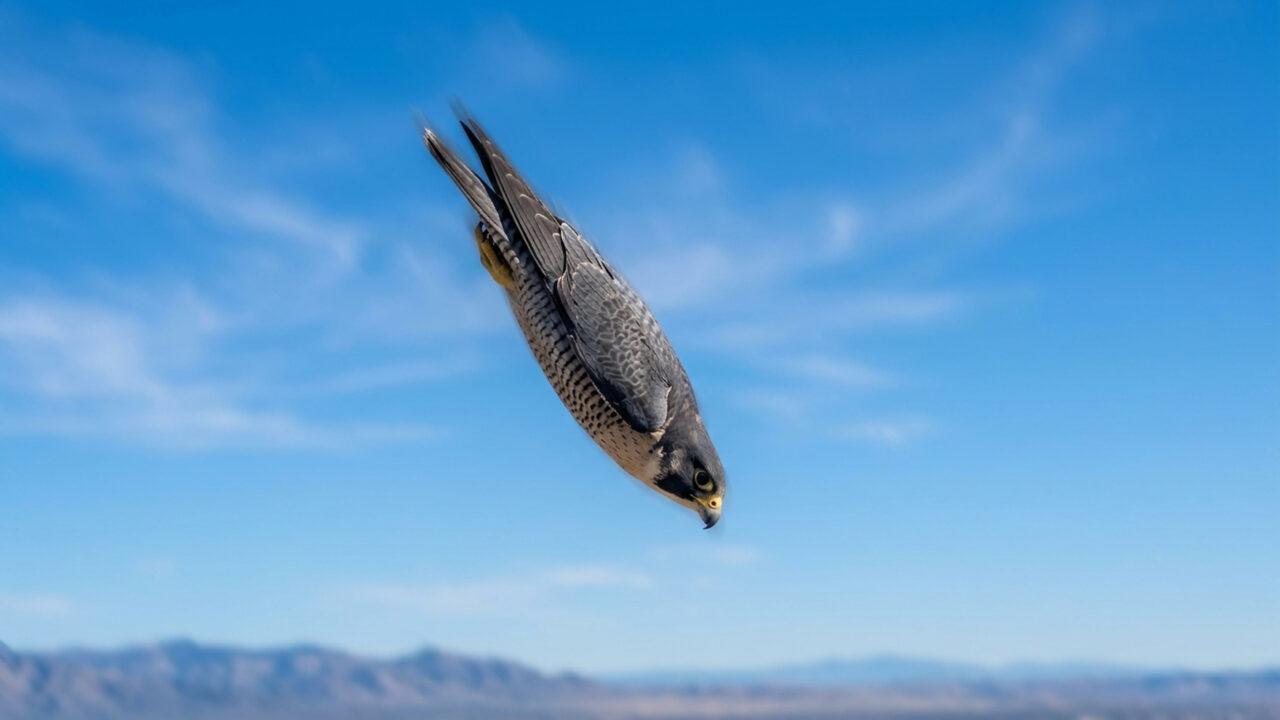
The peregrine falcon can reach approximately 320 km/h (200 mph) during its spectacular hunting dive, known as a stoop. Exceptional experimental dives have suggested speeds approaching 389 km/h (242 mph), although these are not typical everyday hunting speeds.
Guinness World Records
+1
Quick facts
Scientific name
Falco peregrinus
Family
Falconidae
Hunting dive
Up to ~320 km/h
Conservation
Least Concern
Diet
Mostly other birds
Distribution
Every continent except Antarctica
1. What makes the peregrine falcon so fast?
Speed is the peregrine falcon’s greatest hunting advantage. Rather than relying on rapid wingbeats alone, it climbs above its prey and uses gravity to accelerate into an extraordinary dive.
As it descends, the falcon folds its wings close to its body, forming a streamlined shape that reduces aerodynamic drag. Its powerful flight muscles, stiff feathers and exceptional maneuverability help it control its descent.
Scientific wind-tunnel and high-speed-camera studies have examined the sophisticated aerodynamic adjustments behind these dives.
PubMed
+1
2. How does a peregrine falcon hunt?


12
A typical high-speed hunt follows a remarkable sequence:
- Locate: The falcon observes flying birds from a high perch or while soaring.
- Climb and position: It gains an altitude advantage and aligns its approach.
- Dive: It folds its wings and accelerates toward the selected bird.
- Strike: It may hit its prey with its feet or seize it directly.
- Capture: The falcon secures the prey, sometimes after the initial impact.
Peregrines primarily hunt other birds, including pigeons, doves and shorebirds. They can also use level-flight pursuit rather than a vertical dive.
All About Birds
+1
3. Where do peregrine falcons live?
Peregrine falcons occur across an astonishing range of environments, from remote sea cliffs and mountain landscapes to wetlands, deserts and modern cities.
Tall buildings provide ledges resembling natural cliffs, while urban pigeon populations can provide food. This adaptability has allowed peregrines to establish nesting territories in some of the world’s busiest metropolitan areas.
BirdLife Australia
+1
4. Appearance and identification


9
An adult peregrine typically has blue-grey upperparts, a pale barred underside, pointed wings and a prominent dark facial marking resembling a moustache.
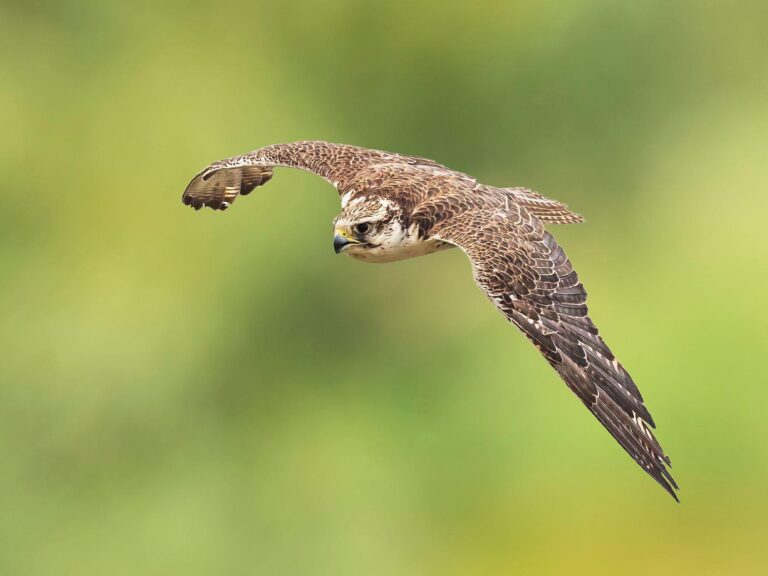
Young peregrines are generally browner, with more heavily streaked underparts. Females are usually substantially larger than males, a common characteristic among birds of prey.
5. The peregrine falcon in the UAE
In the United Arab Emirates, the peregrine is known as the Shaheen (الشاهين) and holds a special place in the region’s falconry heritage.
The Environment Agency – Abu Dhabi conducts research into peregrine migration and supports the Sheikh Zayed Falcon Release Programme. Satellite tracking has helped researchers understand movements between breeding grounds and wintering regions.
Emirates Agency for Digital Government
6. Survival and conservation
The peregrine falcon suffered severe population declines in several regions during the twentieth century, particularly because of pesticides such as DDT.
Restrictions on harmful chemicals, habitat protection, captive-breeding programmes and reintroductions helped populations recover. The species is currently classified globally as Least Concern, although poisoning, hunting, collisions and habitat pressures remain important concerns in some areas.
BirdLife DataZone
+2
7. Why this bird is extraordinary
The peregrine falcon is not simply an exceptionally fast bird. It combines advanced flight control, acute vision, precision timing and a remarkable ability to adapt to changing environments.
Its recovery also demonstrates how targeted conservation can reverse serious wildlife declines.
From towering cliffs to city skylines, the peregrine continues to represent one of nature’s finest examples of speed, elegance and aerial mastery.
8. Videos to feature
Peregrine Falcon Sky Dive — BBC Studios
Footage of an extraordinary hunting dive above London.Watch video

Peregrine Falcon: Bird in the Spotlight — Cornell Lab
A concise species introduction covering identification, food, nesting and habitat.Watch video

Peregrine Falcon Photo & Video Gallery — Cornell Lab
Field recordings and footage documenting adult and juvenile birds.Explore gallery
9. Gallery and image licensing
For the website’s minimum 10-picture gallery, the Wikimedia Commons peregrine falcon collection contains photographs of birds in flight, juveniles, nests, chicks and hunting scenes.
Select at least 10 distinct images after checking each file’s actual licence, attribution requirements and suitability for website publication. The images displayed above are visual references, not cleared publication assets.
10. WordPress SEO package
| Field | Recommended value |
|---|---|
| Website | birds.bin3aiah.net |
| Article ID | BIRDS-001 |
| SEO title | Peregrine Falcon: World’s Fastest Diving Bird |
| Slug | peregrine-falcon-fastest-diving-bird |
| Focus keyword | peregrine falcon |
| Secondary keywords | peregrine falcon speed, fastest diving bird, Shaheen falcon, falcon hunting dive |
| Category | Birds of Prey |
| Tags | Peregrine Falcon, Shaheen, Falcons, Wildlife, Bird Speed, UAE Birds |
| Featured image | Peregrine falcon in a high-speed dive |
Meta description:
Discover how the peregrine falcon reaches 320 km/h in a hunting dive. Explore its speed, habitat, behavior and conservation.
Suggested featured-image alt text: Peregrine falcon diving through the sky at high speed with its wings folded.
Publication status: Article and SEO draft prepared. Media selection and rights verification remain before publishing; nothing has been uploaded or published.